
Welcome to Scattered Daydreams
Embark on a creative journey with Scattered Daydreams, where imagination knows no bounds. Explore personalized craft projects, delightful baking and cooking creations, and themed content that celebrates the spirit of each month. Join our community and share your thoughts, questions, and inspirations.
Paranormal AND Unexplained Encounters
Paranormal and unexplained encounters have fascinated people for centuries, especially stories of strange events that seem to defy ordinary explanation. These experiences can include ghostly apparitions, unexplained sounds, mysterious lights, UFO sightings, encounters with cryptids, haunted locations, and unusual events witnessed by multiple people. While some encounters may eventually have logical explanations, others remain mysteries that continue to spark curiosity and debate. Personal accounts and eyewitness stories give these experiences a sense of mystery, leaving many people wondering whether there are aspects of our world that science has yet to fully understand. Whether viewed as supernatural events, misinterpretations, or unexplained phenomena, these encounters continue to capture our imagination and inspire us to explore the unknown.


Bell Witch
The Bell Witch is one of America's most famous and enduring supernatural legends. The story centers on the Bell family, who lived near Adams, Tennessee, in the early 1800s. According to legend, beginning around 1817, the family began experiencing strange occurrences in their home, including unexplained noises, voices, mysterious scratching, objects moving on their own, and physical attacks.
The Enfield Poltergeist
The Enfield Poltergeist is one of the most famous alleged paranormal cases in modern history. Unlike many American paranormal stories, this case took place in Enfield, London, England, between 1977 and 1979. The events reportedly involved strange noises, objects moving by themselves, furniture being thrown, and alleged paranormal activity surrounding a family living in a council house.
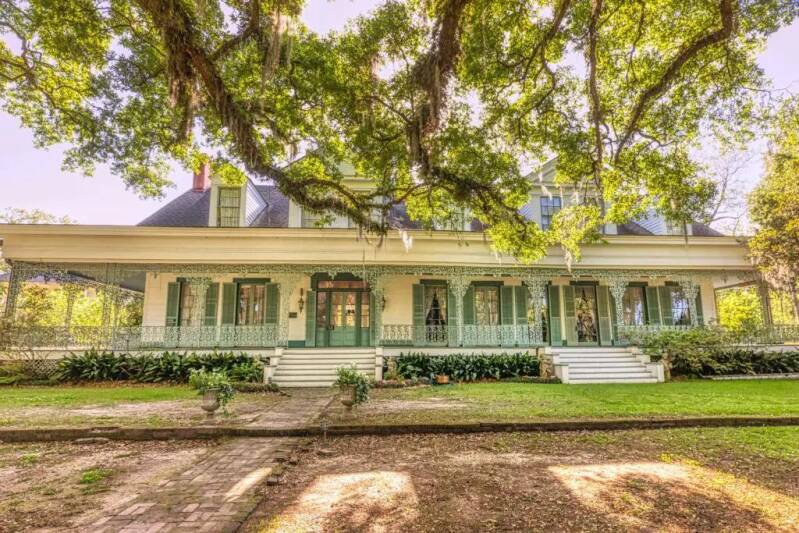
The Myrtles Plantation
The Myrtles Plantation is one of the most famous allegedly haunted historic homes in the United States. Located in St. Francisville, Louisiana, the plantation is surrounded by stories of ghosts, unexplained activity, and tragic events. Its reputation as a haunted location has made it a popular destination for people interested in American history and the paranormal.
The Roswell UFO Incident
The Roswell UFO incident is one of the most famous UFO cases in American history. It took place near Roswell, New Mexico, in July 1947, after mysterious debris was discovered on a ranch. What began as a military announcement about a recovered "flying disc" eventually became one of the world's most famous stories about a possible extraterrestrial spacecraft.
The Phoenix Lights
The Phoenix Lights are one of the most famous UFO sightings in American history. The event occurred over Arizona on March 13, 1997, when thousands of people reported seeing unusual lights and objects moving across the night sky. The sightings stretched from Nevada through Arizona and into Mexico, with a large number of reports coming from the Phoenix area.
The Travis Walton Abduction
The Travis Walton abduction is one of the most famous alleged alien-abduction cases in American history. It occurred on November 5, 1975, in Arizona's Apache-Sitgreaves National Forest, near Heber. Walton, a young logger, disappeared for five days after his coworkers said they witnessed him being struck by a beam of light from a strange, disc-shaped object.